The most common question business owners ask before investing in AI is a reasonable one: what am I actually going to get back? Vendors love to talk about transformation and potential. What you need are numbers you can compare against your current costs.
This guide covers real ROI ranges based on common small business use cases, along with the factors that push results higher or lower. The goal is to help you build a business case before you spend anything.
How to think about AI automation ROI
ROI on AI automation comes from two places: cost reduction and revenue growth. Cost reduction is easier to measure and tends to show up faster. Revenue growth, from better customer experience or faster response times, takes longer and is harder to attribute directly, but it's often larger in the long run.
For most small businesses starting out, the ROI case is built on cost reduction first. That means identifying tasks that currently consume staff time and asking whether software can handle them reliably enough to free that time for higher-value work.
According to a McKinsey Global Institute analysis, knowledge work automation has the potential to reduce labor costs by 20 to 30 percent across many business functions. For small businesses where labor is the primary expense, that's meaningful.
ROI by use case
Customer service and support automation
Automating responses to common customer questions is one of the fastest-payback use cases. If your team currently spends 2 to 4 hours per day answering the same 20 questions over email, chat, or phone, that's 10 to 20 hours per week that an AI system can largely absorb.
At a fully-loaded labor cost of $25 per hour (wages plus benefits), that's $250 to $500 per week, or $13,000 to $26,000 per year in staff time. A well-built AI customer service system typically costs $300 to $800 per month, or $3,600 to $9,600 per year. The math usually works out quickly.
Realistic payback period: 2 to 6 months for businesses with meaningful customer contact volume.
Appointment scheduling and reminders
Scheduling automation is particularly strong for service businesses: medical offices, salons, law firms, auto shops, and any business that books appointments. The labor cost of scheduling, rescheduling, sending reminders, and handling no-shows adds up fast.
A medical practice seeing 40 patients per day might spend 3 to 4 staff hours daily on scheduling-related tasks. At $20 per hour, that's $15,000 to $20,000 per year. Automated scheduling systems with AI reminders typically run $100 to $400 per month and reduce no-show rates by 25 to 40 percent, adding revenue recovery on top of the labor savings.
Realistic payback period: 3 to 9 months.
Data entry and document processing
Businesses that process invoices, contracts, intake forms, or any kind of structured document can see dramatic time savings from automation. AI-powered document processing can extract, validate, and route information without human involvement.
A business processing 100 invoices per month at 5 minutes each is spending over 8 hours per month on manual data entry. That might not sound large, but it scales fast. The error rate from manual entry also creates downstream costs in corrections, disputes, and reconciliation time.
AI document processing typically costs $200 to $600 per month for SMB-scale volume. Payback period: 4 to 12 months, faster if error-correction costs are factored in.
Lead qualification and follow-up
AI can dramatically compress the time between a new lead coming in and a qualified conversation happening. Automated lead qualification, where an AI asks the right questions, scores the lead, and routes hot prospects to your sales team immediately, can increase conversion rates by 20 to 40 percent just by eliminating delay.
Harvard Business Review research found that contacting leads within the first hour of inquiry makes a business seven times more likely to have a meaningful conversation. Automation makes that response time achievable around the clock without additional staff.
For a business generating 50 leads per month with a 20% close rate and an average deal value of $1,500, a 25% improvement in conversion means 2.5 additional deals per month, or $3,750 in extra revenue. That alone typically covers the cost of automation several times over.
Social media and marketing automation
Content scheduling, email sequences, and ad management can all be partially automated. The ROI here is harder to measure directly, but the time savings are real. A business that currently spends 5 hours per week on social media management can often reduce that to 1 to 2 hours with smart automation tools, freeing the owner or marketing person for higher-value work.
At an opportunity cost of $50 per hour for an owner's time, 3 to 4 hours per week recovered is $7,800 to $10,400 per year in productive capacity returned to your business.
What drives ROI higher
- High repetition volume. The more times a task is performed, the bigger the automation dividend. A business handling 200 customer inquiries per day sees far more return than one handling 20.
- High labor cost in the automated area. Automating tasks previously handled by expensive staff, or by the owner directly, produces higher returns than automating minimum-wage tasks.
- Revenue recovery potential. Automation that captures after-hours leads or reduces appointment no-shows doesn't just save cost; it adds revenue that would otherwise be lost.
- Error reduction. In regulated industries or complex processes, reducing error rates has real financial value that adds to the ROI calculation.
What drives ROI lower
- Poor fit between the tool and the task. Buying an AI solution for a process with too much variability or that requires too much judgment reduces reliability and increases the cost of exceptions.
- Low adoption by staff. If your team doesn't trust or use the system, you pay for it but don't capture the savings. Change management matters.
- Overcomplicated implementation. A system that required 6 months and $40,000 to build for a problem that warranted a $500-per-month SaaS tool is poor ROI regardless of what it does.
- Skipping the measurement step. If you don't track what you were spending before and after, you can't prove the return. Set a baseline before you deploy anything.
A simple ROI framework to use before you buy
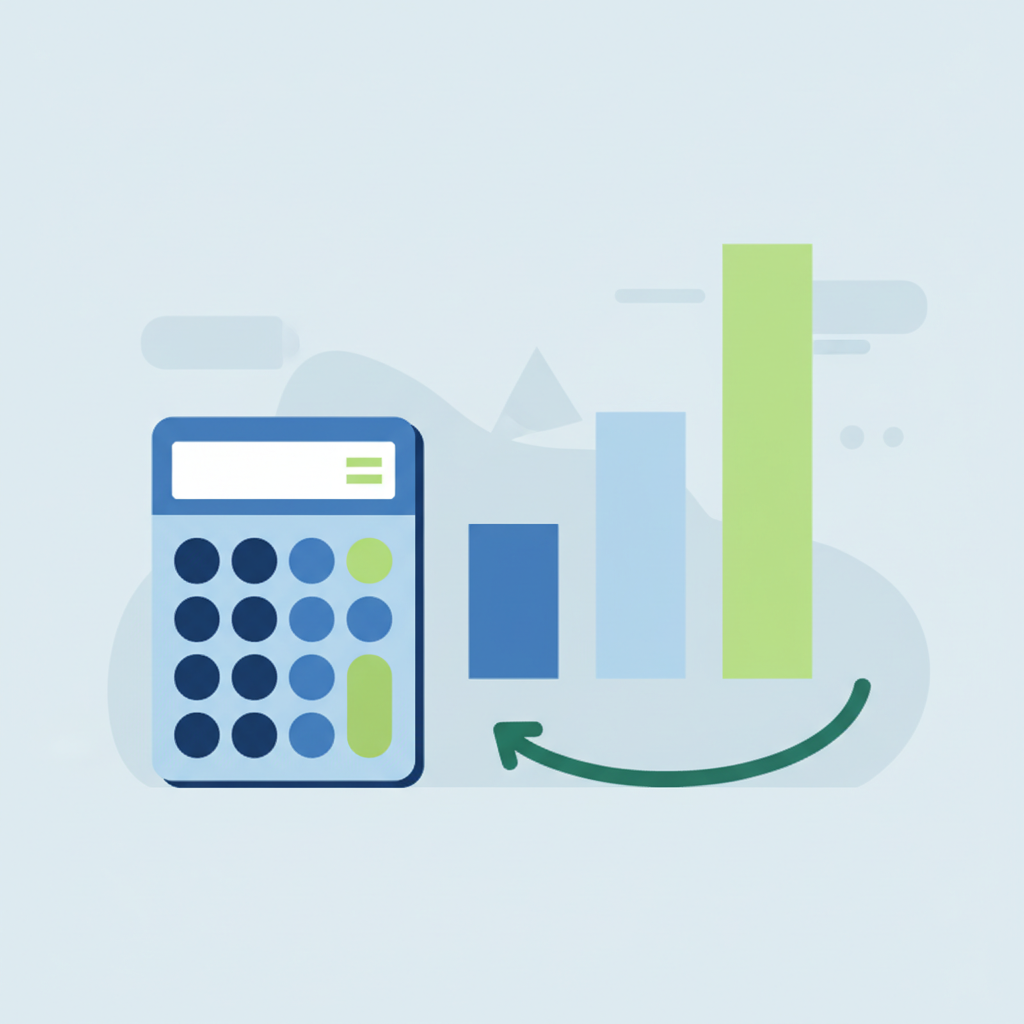
Before engaging any agency, run this calculation for the process you're considering automating:
- Estimate the weekly hours currently spent on the task
- Multiply by the fully-loaded hourly cost (wages plus benefits plus overhead)
- Multiply by 52 to get an annual cost figure
- Get quotes from two or three agencies for the automation solution
- Divide the annual cost by the total solution cost to get a rough payback period
If the payback period is under 18 months, the project is usually worth serious consideration. Under 12 months, it's a priority. Under 6 months, it's almost certainly leaving money on the table to delay.
What agencies should be showing you
When you talk to an AI agency, they should be able to walk you through an ROI estimate before you commit to anything. They should ask about your current process, your volume, your labor costs, and your error rates. If they can't build even a rough financial model for your situation, they may not have enough SMB experience to deliver reliable results.
Browse automation-focused AI agencies on AgencyMatchAI to find firms that specialize in the use cases most relevant to your business.
According to Gartner's AI research, the highest-performing AI implementations share a common trait: they started with a clear business problem and a measurable success metric, not with a technology in search of a use case.
Setting realistic expectations
AI automation isn't magic, and it doesn't work instantly. Most projects have a 4 to 8 week implementation period before anything is live. After launch, it typically takes another 4 to 8 weeks of tuning before the system is performing at full capacity. Plan for 3 to 6 months from start to full ROI realization.
That timeline is still dramatically faster than hiring, training, and managing additional staff to do the same work. Start with the right use case and an agency that has the track record to deliver, so you're not wasting your implementation window on a project that won't perform.
Take the AgencyMatchAI quiz to identify which automation use cases make the most sense for your specific business type, then connect with agencies that have experience in exactly those areas.